Chapter 14
Using Stamps as Postage
This chapter is for people who have MNH USA stamps after 1940 who may want to consider using them as postage.
|
Obvious Rules You may not reuse stamps on your mail. (This includes stamps that missed the canceling machine at the post office.) You may not use foreign stamps to mail items originating in the United States or its territories. |
|
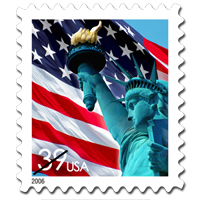
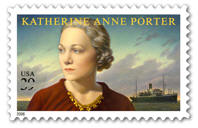
Examples of "Regular" Stamps |
 |
 |
 |
14.1 “Regular” stamps
In bulk, almost any stamp dealer will buy your MNH, post-1940, USA stamps at 80% of face value or a little more. If you have a sheet of 100 ten-cent stamps, you would be paid $8. In addition to dealers, you will find classified ads in Linn’s Stamp News. You can also try selling these stamps on online auction houses like eBay.
You do have an alternative, however. A 10-cent MNH stamp is worth ten cents as postage or 100% of face value.
Let’s say you find an album with $1,000 in MNH USA sheets. You can get $800 for them if you sell them in bulk. Or they are worth $1,000 if used to mail letters. The first option gets you cash immediately. The second option may require years to use up the stamps. You need to weigh which one appeals to you the most. However, before doing so, read the text that follows. It may give you some additional options.
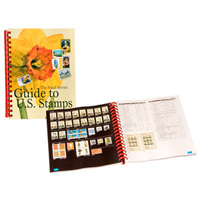
The Postal Service Guide to U.S. Stamps
1. The first thing you need to do is to identify if you have any “premium” sheets. A premium sheet is a sheet of stamps for which a dealer will pay face value or more. You can spend about $20 to find out. Here is what to do:
a) Go to your local post office and buy a copy of the book, The Postal Service Guide to U.S. Stamps. The cost is $19.95. (If your post office does not have the book, you can order one here: https://shop.usps.com. Simply click on the "For Collecting" link.) If you have a Scott catalog, that will also do. What you can get from either book is the Scott numbers and unused prices. (You can also get an estimate by looking at the completed sales on eBay.)
b) Next, inspect the gum on the back of each sheet. If it is damaged, the sheet is not saleable. If the sheet if folded or creased, it is not saleable. Set these sheets in another pile. (Note: If only part of the sheet is damaged, you can probably sell the good part at single stamp prices.)
c) Set aside all of the “odd” stamps including service-inscribed stamps (bulk rate, non-profit organization, pre-sorted first class, etc.), duck stamps, non-postage stamps (e.g., postage due). These will be discussed at the end of this chapter.
d) Find all the Scott numbers for all the sheets you have by using one of the reference books in step a. Do not write the numbers on the sheets! KEEP A SEPARATE LIST. Hint: Start with the colorful se-tenant sheets. More than likely you will find a lot of these are “premium” stamps.
e) Now look at the unused prices in the Scott catalog or in the U.S. Postal Service guide. You'll soon notice a pattern. The SCV of non-premium stamps will be about twice the face value. For example, a common 22-cent stamp I looked up had a SCV of 40 cents, approximately double. The premium stamps you have will be more than double.
Note: If you are selling se-tenants (blocks of several stamps, all with different designs), the stamps must be in Scott number order. The one with the lowest Scott number must be in the upper left. If you are selling full sheets of se-tenants, you don’t need to worry about this as there will be a price for the entire sheet.
After you sell your premium stamps, you will be left with your “common” stamps. These include the ones that are damaged. You may still be able to sell part of the sheets at a premium. Check the catalog to see if the plate-block of the sheet may have premium value while the rest of the sheet does not. If the plate block does have premium value, you may want to carefully remove it from the sheet and see if you can find a dealer willing to buy it.
At this point, you can sell the remainder of what you have at a discount and split the money among all of the inheritors. Of course, if there are ten people who inherited the stamps, you can always make ten equal piles by face value and give each person a pile. This may or may not cause more trouble than selling the stamps at a discount.
Here are some suggestions on what to do with your pile of stamps:
1. Use them on all your outgoing mail and packages. I guarantee you will have the most interesting-looking mail in town!
2. Sell them to your friends and neighbors at face value. Many will be happy to help you get rid of the stamps. It also saves their having to wait in line at the post office to buy stamps.
3. Check around with local businesses and churches. Some may be happy to buy stamps if you give them a 2%-to-5% discount off of face value. Offer to paste the stamps on some of their envelopes for them, and then you charge a higher price. (As a marketing tool, consider that a business doing advertising will get more people to open the envelope if the stamps on the outside are interesting.)
14.2 “Odd Stamps”
Some collectors collect “odd” stamps. These may include service-inscribed stamps that say “bulk issue,” “ pre-sorted first-class,” “non-profit organization” and the like on them. It may also include official stamps, duck stamps, postage due stamps and any number of things.
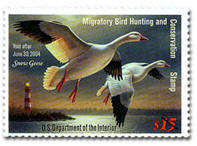
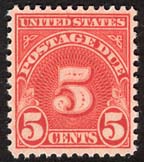
Duck Stamp and postage due stamp
Official stamps, postage due stamps and duck stamps are not valid for postage. You must sell them by another method!
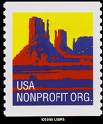

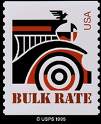
Service-Inscribed Stamps
The most common stamp you will find is a service-inscribed stamp: bulk, non-profit organization, pre-sorted, etc. Many collectors buy these in full coils or sheets. Generally, you can't use these stamps as postage. You should sell these in some other way.
If there is no numeric value printed on the stamp, this chart from the United States Postal Service will show you how much each stamp is worth: http://pe.usps.com/text/qsg300/Q604a.htm.
14. 3 Stamped Envelopes and Postal Cards
You may use stamped envelopes to mail letters. If needed, you may paste on additional postage stamps to bring the total postage up to the current rate.
You may paste on additional postage stamps on postal cards to bring them up to the current post card rate.
You may not cut of the "stamp" from a stamped envelope or a postal card and paste the "stamp" onto a letter.
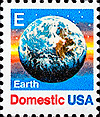
Non-denominated stamp
14.4 Non-denominated Stamps
This chart from the United States Postal Service will show you how much each stamp is worth: http://pe.usps.com/text/qsg300/Q604a.htm.
Note: there are a few USA semi-postal stamps floating around. If you see a stamp with a marking like this "First-Class +", as far as using the stamp for postage goes, it means the stamp is currently worth what it takes to mail a one-ounce First Class letter within the USA or its territories.

